D4FST
Design for Food System Transformation (D4FST) explores how persuasive design strategy can foster low-carbon footprint dietary habits in urban communities.
Design for Food System Transformation (D4FST) explores how persuasive design strategy can foster low-carbon footprint dietary habits in urban communities.

2022
Designer
Creative Director
User Study
UI/UX Design
In 2022, PDT Food Collective launched the “Cantonese Low-Carbon Cuisine” initiative, a project promoting climate-friendly eating habits. By campaigning restaurants and residents to select more climate-friendly food, the initiative aimed to influence the production of upstream suppliers.
As part of the initiative, D4FST explores the technological mediation of urban dietary habits. The goal was to design a Product-Service System (PSS) that bridges the gap between household food waste (micro-level) and supply chain dynamics (macro-level). By utilizing speculative prototyping and persuasive design, the project investigates how real-time feedback can shift consumer mindsets toward low-carbon futures.
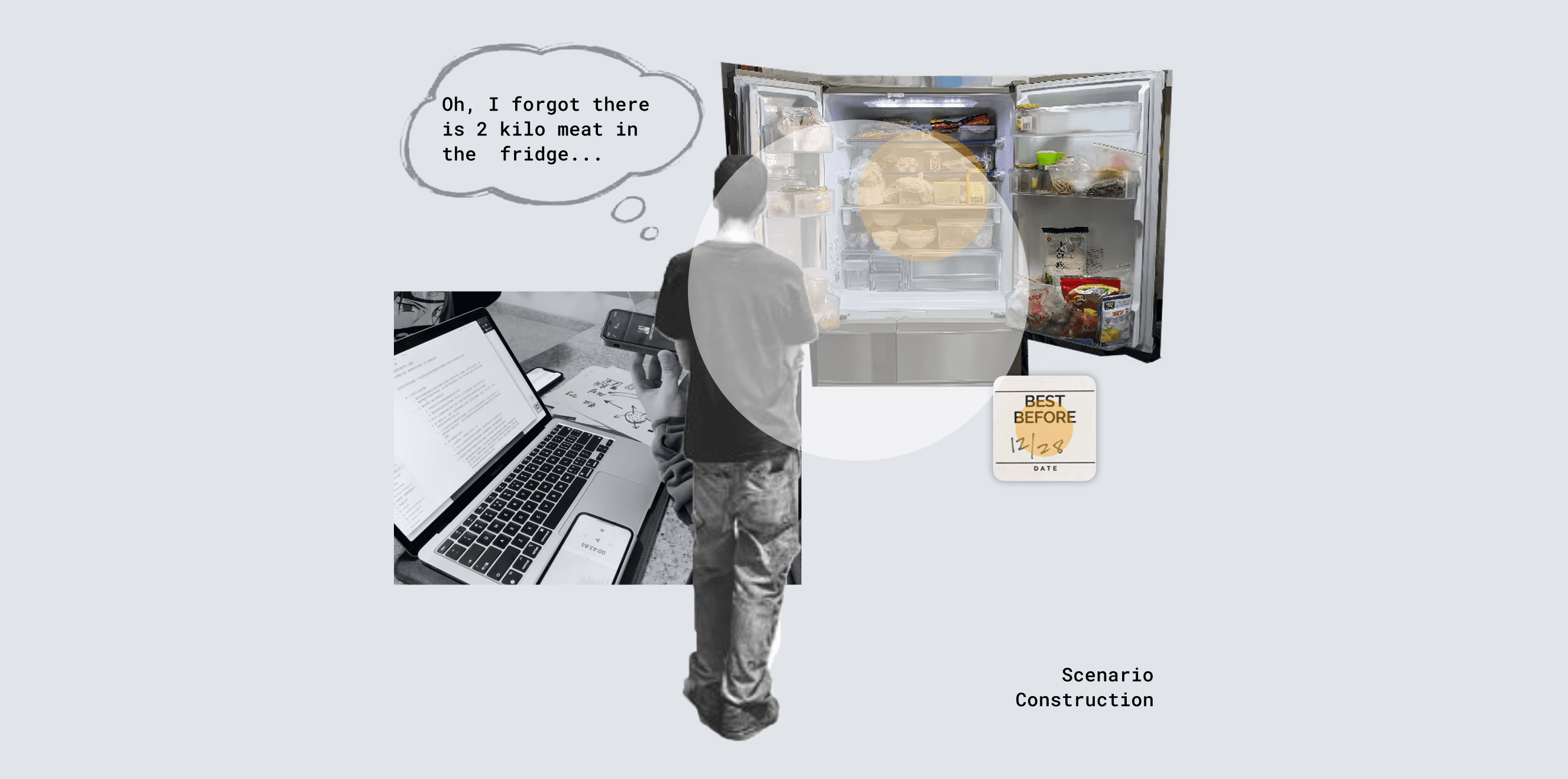
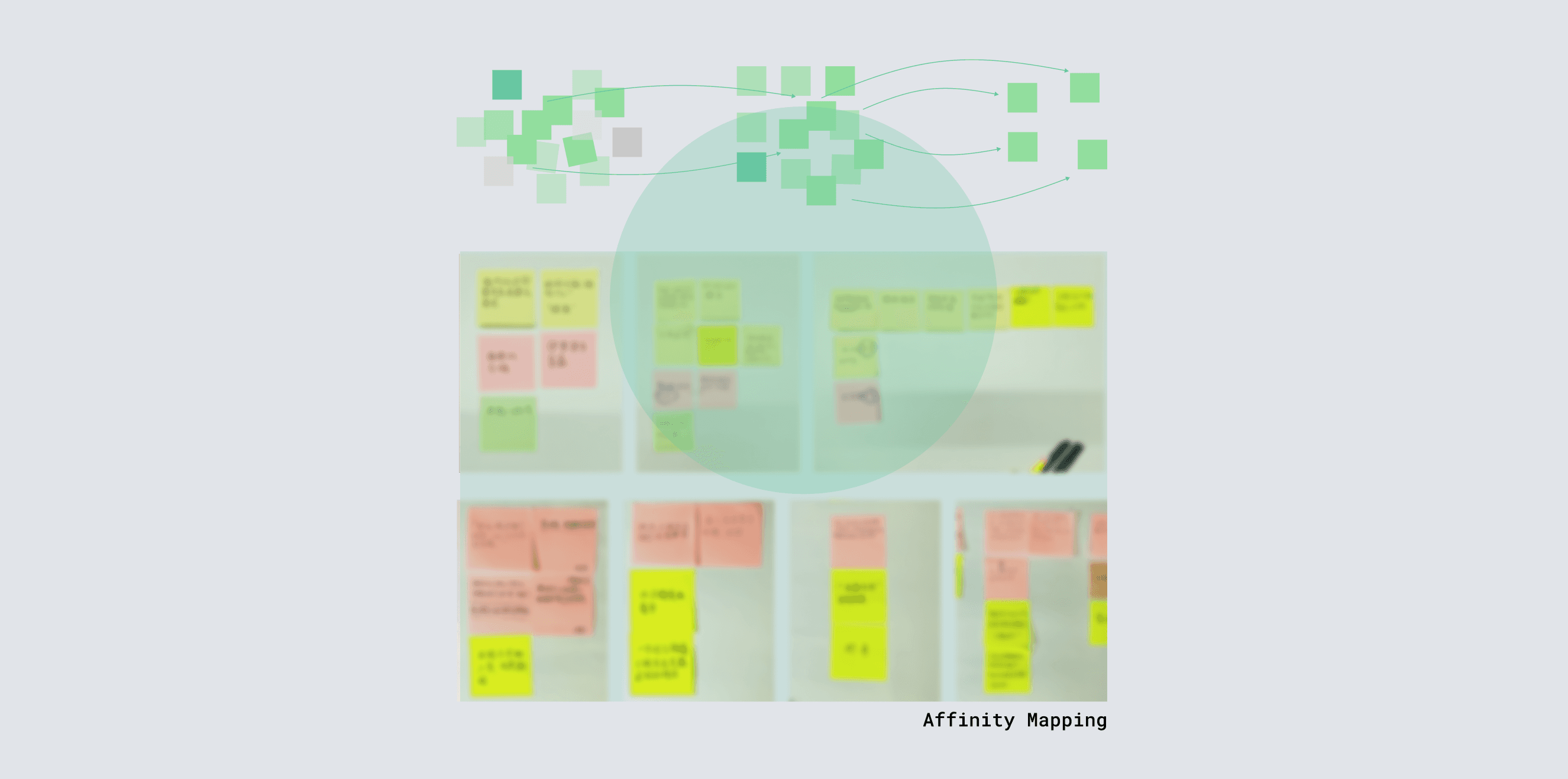
Through semi-structured interviews with community residents, followed by affinity mapping analysis, we identified a behavioral pattern in household food waste: over-purchasing often leads to food exceeding its consumption period without participants' awareness, eventually resulting in disposal.
Furthermore, participants generally lacked awareness of the carbon implications of their dietary choice. However, once introduced to the concept of low-carbon diets, most participants indicated a willingness to adopt more sustainable eating practices.
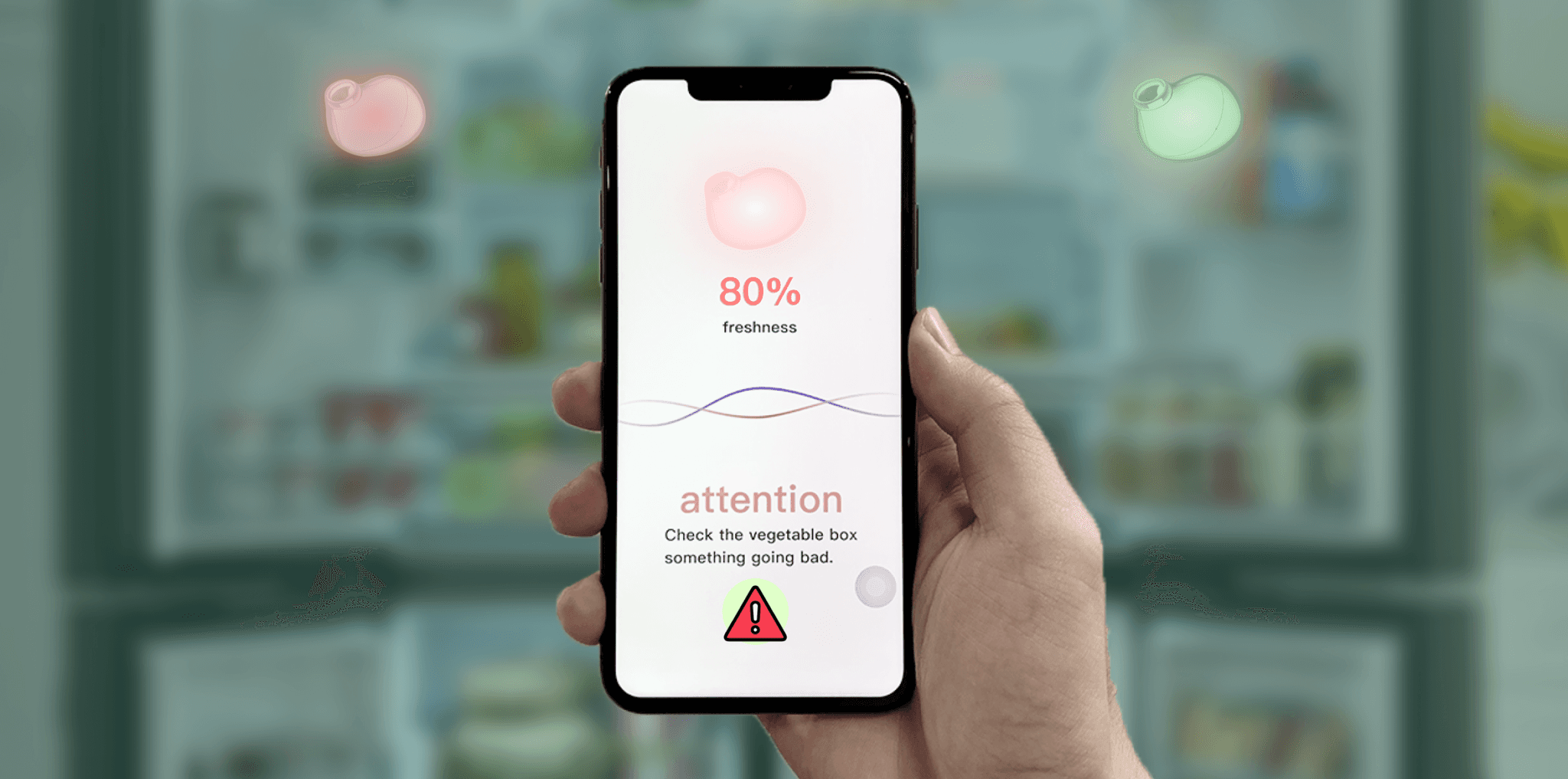
We designed a product–service system consisting of an in-fridge food freshness sensor and a mobile app that tracks stored items and notifies users before food spoils.
By partnering with local grocery stores, the system rewards low-carbon food choices and supports food redistribution, forming a community-level circulation system that reduces waste and carbon emissions.
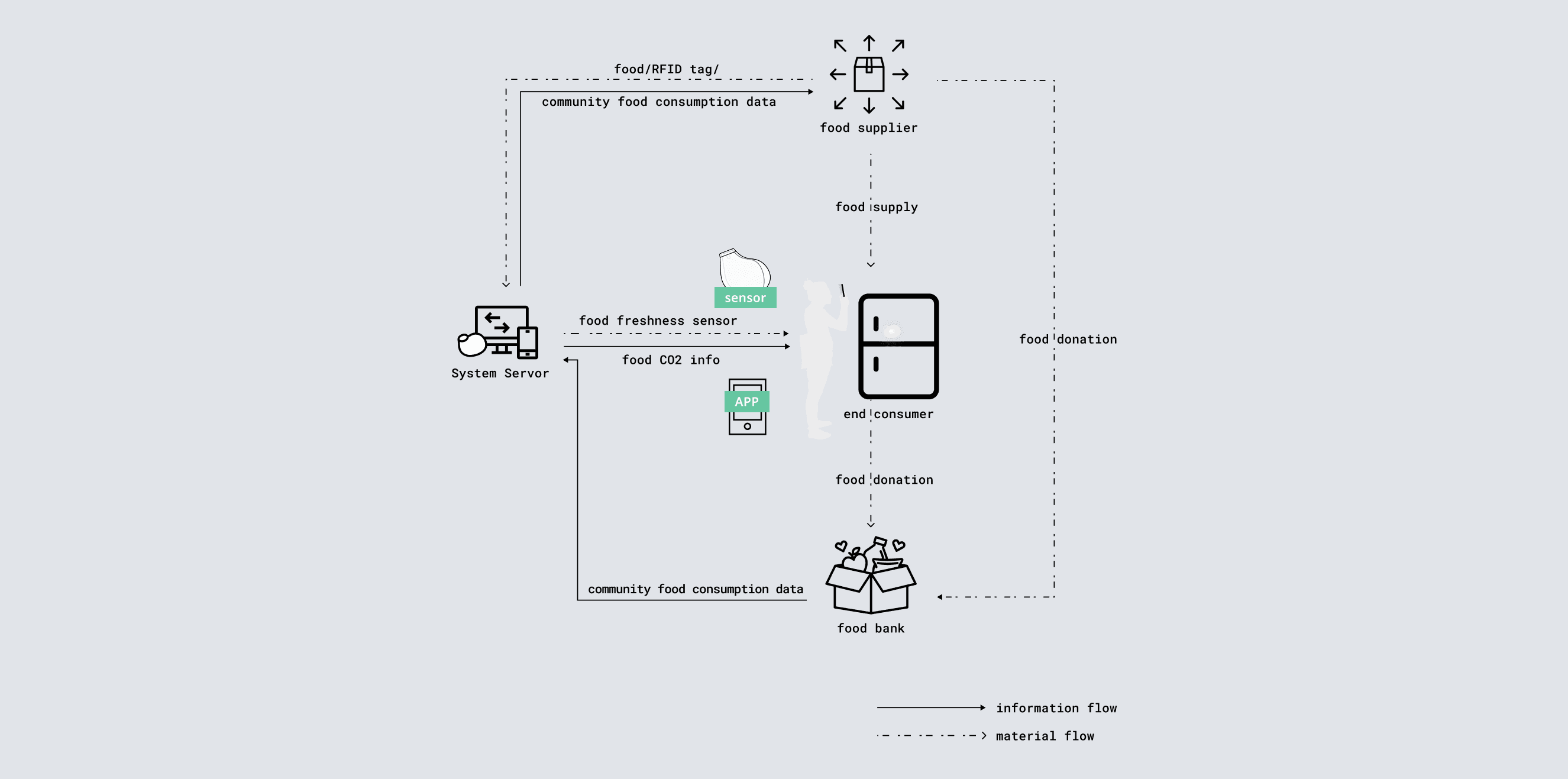
The system map visualises the interdependence between digital information and physical material flows. The multidirectional flows construct a sociotechnical structure for a circular food economy loop that incentivises sustainable behaviour through community-level redistribution.
The system relies on data visibility and community coordination to drive sustainable transformation:
For food suppliers: Real-time insights from community consumption data enable adaptive production planning, minimising oversupply at the source.
For end consumers: The nexus of sensor data (freshness) and CO2 information provides tangible feedback, transforming abstract carbon impacts into actionable household decisions.
For food banks: A shared data layer optimises the material redistribution loop, ensuring that surplus food is diverted from waste to community needs with maximum efficiency.
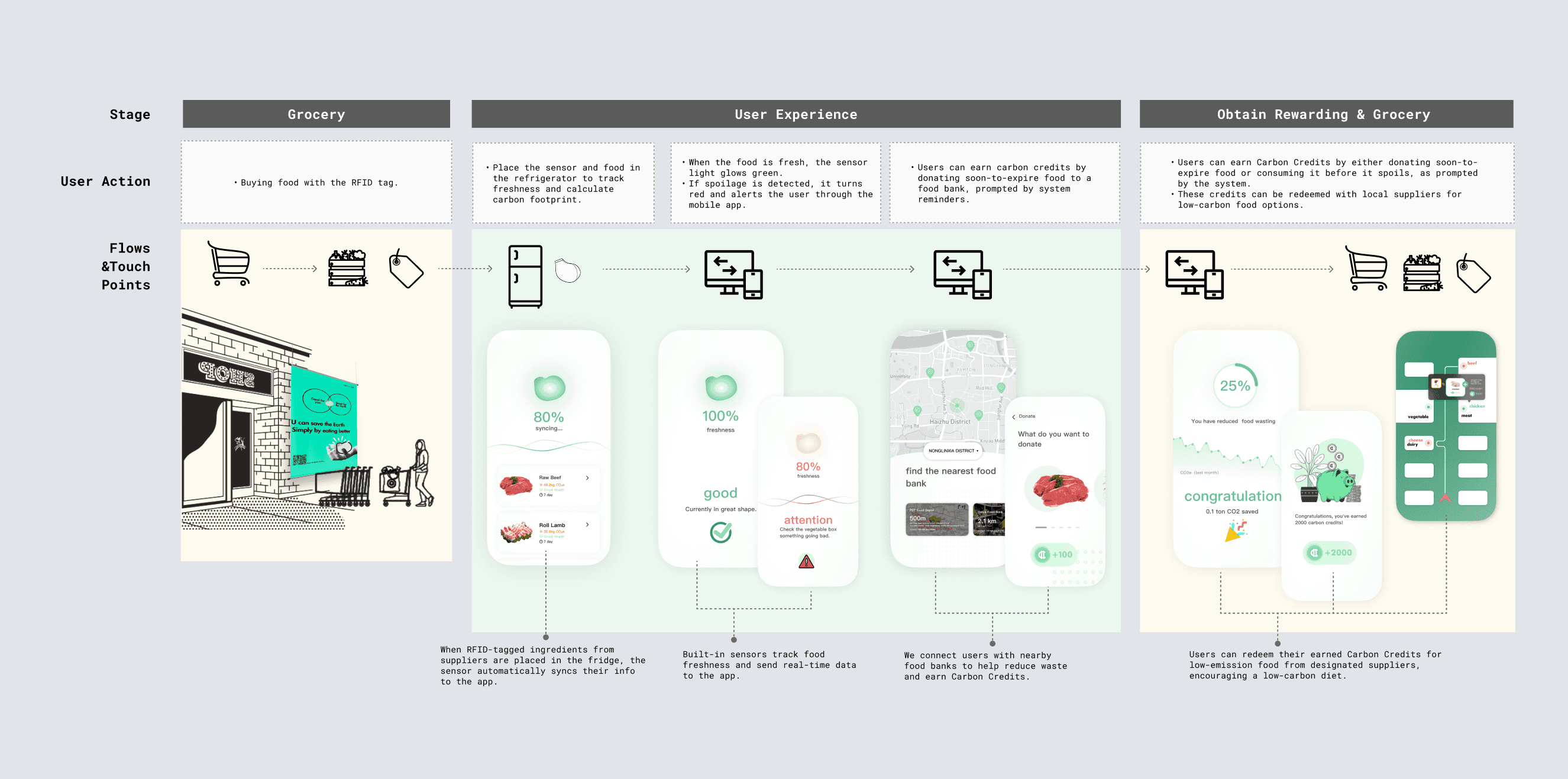
The user journey map illustrates the technological mediation of sustainable habits, mapping how strategic touchpoints translate complex carbon data into tangible, actionable interactions. The system integrates sensor-driven feedback and persuasive narratives to align individual behaviours with systemic environmental goals.
Food Freshness Sensor: Acts as a tangible interface for biological monitoring, providing real-time feedback that transforms abstract "best-before" dates into a heightened sensory awareness of food condition.
APP: Integrates environmental and behavioural data to visualise users’ food carbon footprint and facilitate redistribution through nearby food banks.
Carbon Credit: Encourages sustainable consumption by converting users’ low-carbon behaviours into redeemable rewards within the local food network.
Supply System: Employs adaptive algorithms to align consumer behaviour with community food supply, reducing inefficiency and waste.
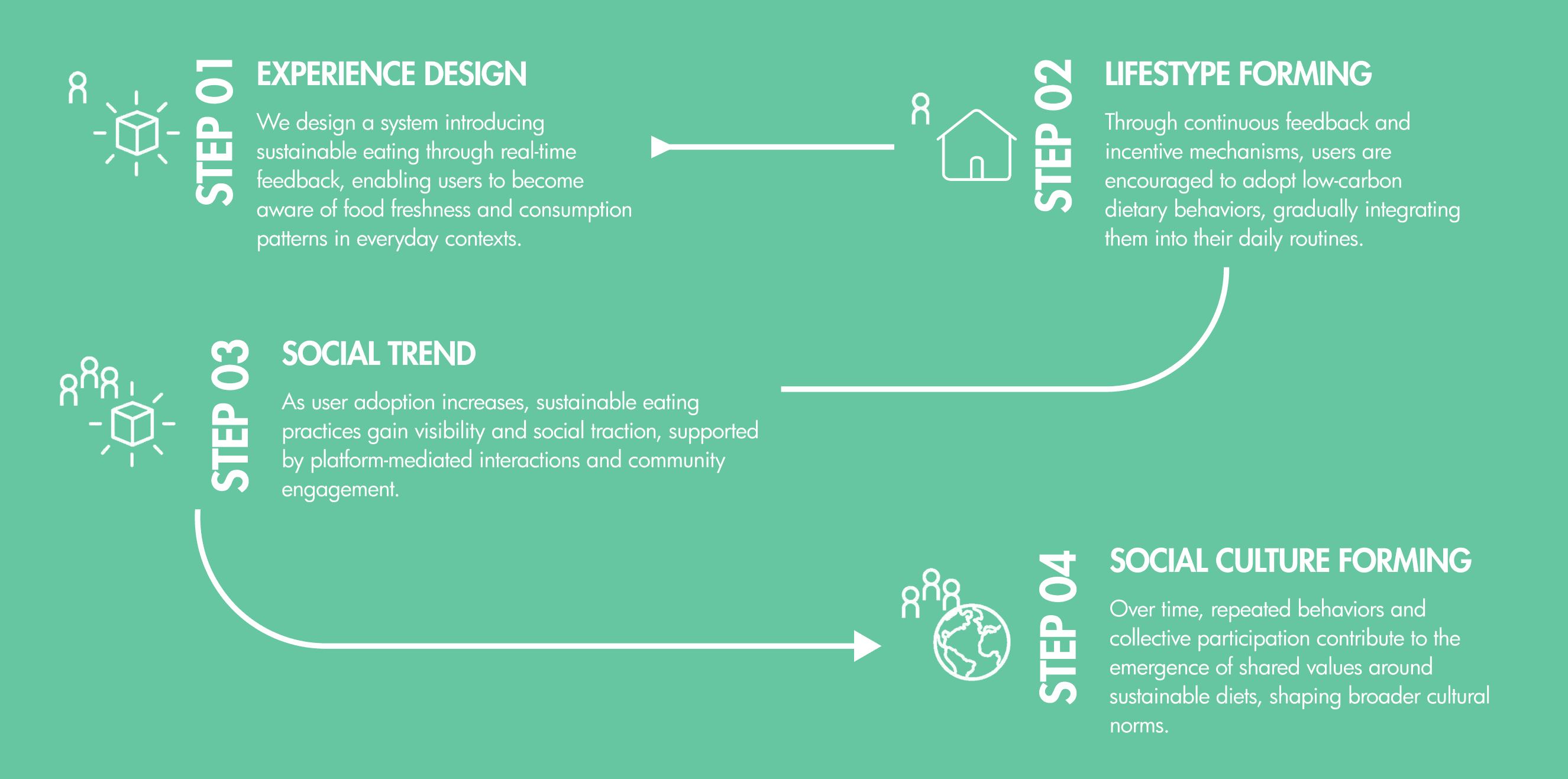
This project reframes food waste as a system-level coordination challenge rather than just a behavioural issue. It demonstrates the role of design in making abstract food footprint tangible, fostering long-term societal transformation through daily interactions.
Design for Food System Transformation (D4FST) explores how persuasive design strategy can foster low-carbon footprint dietary habits in urban communities.
2022
Designer
Creative Director
User Study
UI/UX Design
In 2022, PDT Food Collective launched the “Cantonese Low-Carbon Cuisine” initiative, a project promoting climate-friendly eating habits. By campaigning restaurants and residents to select more climate-friendly food, the initiative aimed to influence the production of upstream suppliers.
As part of the initiative, D4FST explores the technological mediation of urban dietary habits. The goal was to design a Product-Service System (PSS) that bridges the gap between household food waste (micro-level) and supply chain dynamics (macro-level). By utilizing speculative prototyping and persuasive design, the project investigates how real-time feedback can shift consumer mindsets toward low-carbon futures.
Through semi-structured interviews with community residents, followed by affinity mapping analysis, we identified a behavioral pattern in household food waste: over-purchasing often leads to food exceeding its consumption period without participants' awareness, eventually resulting in disposal.
Furthermore, participants generally lacked awareness of the carbon implications of their dietary choice. However, once introduced to the concept of low-carbon diets, most participants indicated a willingness to adopt more sustainable eating practices.
We designed a product–service system consisting of an in-fridge food freshness sensor and a mobile app that tracks stored items and notifies users before food spoils.
By partnering with local grocery stores, the system rewards low-carbon food choices and supports food redistribution, forming a community-level circulation system that reduces waste and carbon emissions.
The system map visualises the interdependence between digital information and physical material flows. The multidirectional flows construct a sociotechnical structure for a circular food economy loop that incentivises sustainable behaviour through community-level redistribution.
The system relies on data visibility and community coordination to drive sustainable transformation:
For food suppliers: Real-time insights from community consumption data enable adaptive production planning, minimising oversupply at the source.
For end consumers: The nexus of sensor data (freshness) and CO2 information provides tangible feedback, transforming abstract carbon impacts into actionable household decisions.
For food banks: A shared data layer optimises the material redistribution loop, ensuring that surplus food is diverted from waste to community needs with maximum efficiency.
The user journey map illustrates the technological mediation of sustainable habits, mapping how strategic touchpoints translate complex carbon data into tangible, actionable interactions. The system integrates sensor-driven feedback and persuasive narratives to align individual behaviours with systemic environmental goals.
Food Freshness Sensor: Acts as a tangible interface for biological monitoring, providing real-time feedback that transforms abstract "best-before" dates into a heightened sensory awareness of food condition.
APP: Integrates environmental and behavioural data to visualise users’ food carbon footprint and facilitate redistribution through nearby food banks.
Carbon Credit: Encourages sustainable consumption by converting users’ low-carbon behaviours into redeemable rewards within the local food network.
Supply System: Employs adaptive algorithms to align consumer behaviour with community food supply, reducing inefficiency and waste.
This project reframes food waste as a system-level coordination challenge rather than just a behavioural issue. It demonstrates the role of design in making abstract food footprint tangible, fostering long-term societal transformation through daily interactions.
Design for Food System Transformation (D4FST) explores how persuasive design strategy can foster low-carbon footprint dietary habits in urban communities.
2022
Designer
Creative Director
User Study
UI/UX Design
In 2022, PDT Food Collective launched the “Cantonese Low-Carbon Cuisine” initiative, a project promoting climate-friendly eating habits. By campaigning restaurants and residents to select more climate-friendly food, the initiative aimed to influence the production of upstream suppliers.
As part of the initiative, D4FST explores the technological mediation of urban dietary habits. The goal was to design a Product-Service System (PSS) that bridges the gap between household food waste (micro-level) and supply chain dynamics (macro-level). By utilizing speculative prototyping and persuasive design, the project investigates how real-time feedback can shift consumer mindsets toward low-carbon futures.
Through semi-structured interviews with community residents, followed by affinity mapping analysis, we identified a behavioral pattern in household food waste: over-purchasing often leads to food exceeding its consumption period without participants' awareness, eventually resulting in disposal.
Furthermore, participants generally lacked awareness of the carbon implications of their dietary choice. However, once introduced to the concept of low-carbon diets, most participants indicated a willingness to adopt more sustainable eating practices.
We designed a product–service system consisting of an in-fridge food freshness sensor and a mobile app that tracks stored items and notifies users before food spoils.
By partnering with local grocery stores, the system rewards low-carbon food choices and supports food redistribution, forming a community-level circulation system that reduces waste and carbon emissions.
The system map visualises the interdependence between digital information and physical material flows. The multidirectional flows construct a sociotechnical structure for a circular food economy loop that incentivises sustainable behaviour through community-level redistribution.
The system relies on data visibility and community coordination to drive sustainable transformation:
For food suppliers: Real-time insights from community consumption data enable adaptive production planning, minimising oversupply at the source.
For end consumers: The nexus of sensor data (freshness) and CO2 information provides tangible feedback, transforming abstract carbon impacts into actionable household decisions.
For food banks: A shared data layer optimises the material redistribution loop, ensuring that surplus food is diverted from waste to community needs with maximum efficiency.
The user journey map illustrates the technological mediation of sustainable habits, mapping how strategic touchpoints translate complex carbon data into tangible, actionable interactions. The system integrates sensor-driven feedback and persuasive narratives to align individual behaviours with systemic environmental goals.
Food Freshness Sensor: Acts as a tangible interface for biological monitoring, providing real-time feedback that transforms abstract "best-before" dates into a heightened sensory awareness of food condition.
APP: Integrates environmental and behavioural data to visualise users’ food carbon footprint and facilitate redistribution through nearby food banks.
Carbon Credit: Encourages sustainable consumption by converting users’ low-carbon behaviours into redeemable rewards within the local food network.
Supply System: Employs adaptive algorithms to align consumer behaviour with community food supply, reducing inefficiency and waste.
This project reframes food waste as a system-level coordination challenge rather than just a behavioural issue. It demonstrates the role of design in making abstract food footprint tangible, fostering long-term societal transformation through daily interactions.